World Humanitarian Day 2026: What makes humanitarian action possible?
Imagine waking up in the morning and getting ready for work while hearing the sound of bombs. Before leaving, you check the latest security updates. You leave the house, pass through checkpoints and move past armed guards. You listen for signs of shelling or airstrikes. And you know that the route you take today may not be safe tomorrow.
For aid workers in conflict-affected settings, this can be part of their daily reality, as they risk their lives to deliver food, healthcare, protection and hope to people affected by crises. According to Aid Worker Security Database (AWSD), 1,187 aid workers fell victim to major security incidents in 2025. While fatalities dropped slightly from previous peaks, 350 humanitarians were killed, marking the second-highest annual death toll ever recorded and pushing the death toll for the previous three years to over 1,000. Additionally, 2025 saw 322 aid workers wounded, 235 kidnapped, and 280 detained or arrested by state actors.
This year’s World Humanitarian Day calls for action to protect civilians and humanitarians as drones and other deadly technologies change the way wars are fought, putting civilians and humanitarian workers at greater risk. Despite repeated commitments from the international community, humanitarians continue to come under attack. Those funding and fuelling the world’s wars must do more to protect civilians and the humanitarians trying to reach them.
Cheap and adaptable armed drones are putting lethal aerial power into more hands than ever. They can track and strike people and vehicles, target essential infrastructure and extend violence far beyond the traditional battlefield. For civilians, this can mean homes, hospitals, roads and places of refuge becoming targets. For humanitarians, drones can disrupt humanitarian assistance, prevent evacuations, cut communities off from essential services and make already dangerous work even more risky.
Whatever weapons are used, civilians and humanitarians remain protected under International Humanitarian Law. As technology advances, human judgment, accountability and the protection of civilians must remain at the centre of decisions about the use of lethal force.
What makes humanitarian action possible?
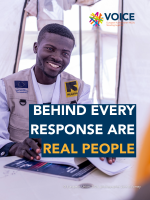
For this year’s World Humanitarian Day, VOICE is bringing together members through a collaborative Instagram campaign: “What makes humanitarian action possible?” The campaign highlights the people and principles that make humanitarian action possible. Explore the campaign on our our Instagram or our LinkedIn page. We invite you to join the conversation and share your own World Humanitarian Day messages.
This World Humanitarian Day, VOICE stands with humanitarian workers and calls for respect for International Humanitarian Law, protection of civilians and humanitarian personnel, and accountability for those who attack them.
The technology of war is changing, but our commitment to humanity cannot.