
VOICE & Global Focus Copenhagen High-Level Roundtable
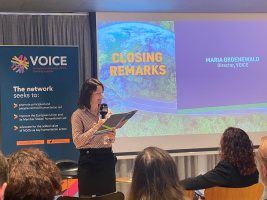
On 30 October, VOICE and Global Focus co-organised a high-level roundtable in Copenhagen to reflect on how the EU and its Member States should engage in fragile and climate-affected contexts at a moment of profound uncertainty for the humanitarian and development systems. The event emerged from a shared recognition that, amid the dismantling of USAID funding and a wider decline in global ODA, there is an urgent need to create a political and operational space for honest and forward-looking discussions especially as crises marked by conflict, climate shocks and instability remain largely absent from political debate.
The roundtable was opened by VOICE President and Global Focus, setting the tone with a call for more principled, flexible and future-oriented EU engagement. It took place at a strategically important moment: Denmark assumed the Presidency of the Council of the EU, negotiations on the post-2027 MFF were intensifying, work on a renewed EU Integrated Approach to Fragility was underway, and preparations for COP30 were accelerating.
The roundtable was widely appreciated by participants, with survey feedback highlighting the frank, honest and substantive nature of the discussions. The event brought together a diverse group of speakers, reflecting a broad range of institutional perspectives and operational experience. Contributors included representatives from DG MENA, DG INTPA, DG ECHO, ODI Global, the Danish MFA, ECDPM, CARE Somalia & Somaliland, and SOS Sahel International Burkina Faso, among others. This diversity enriched the exchanges and strengthened the relevance of the recommendations emerging from each session.
Each segment of the roundtable was also strategically designed to inform ongoing policy reflections. The panel on fragility directly contributed to wider consultations being led by ODI Global to inform DG ECHO. VOICE also used this opportunity to reinforce its recommendations to DG ECHO and Member States on what the next EU approach to fragility should look like.
A workshop around fragility in the Sahel context provided concrete operational insights, with speakers emphasising the importance of remaining engaged despite rising risks, strengthening community-based mechanisms, grounding interventions in robust conflict and context analysis, and ensuring protection mainstreaming across the project cycle. Breakout sessions on the HDP Nexus, localisation, and dis-/misinformation further reinforced the importance of flexibility, contextual agility and genuine power sharing with local actors.
Afterwards, there was the panel on anticipatory action (AA), underscoring that acting before crises strike is faster, cheaper and more dignified, yet still dramatically underfunded. Discussions generated ideas on how AA should feature more strongly within the COP30 agenda, particularly in relation to adaptation, loss and damage, and climate finance. Participants highlighted the importance of locally owned systems, integration into national frameworks, bridging the persistent gap between early warning and early action, and ensuring flexible and pre-arranged financing.
The roundtable concluded with the launch of Global Focus’s new report on financing modalities in Denmark’s development aid, which provided timely insights on how flexible, predictable and locally driven funding models can strengthen HDP coherence and support more sustainable engagement in fragile contexts. Presented in the context of the Danish EU Presidency, the report added a forward-looking dimension to the discussions, highlighting opportunities for the EU and its Member States to rethink financing structures ahead of the next MFF. Its release offered a fitting conclusion to a day marked by a shared commitment to shaping a more effective EU approach to fragility, humanitarian action and climate-responsive programming.
As a follow-up, a short document capturing the key highlights and takeaways from the discussions will soon be shared.