Fragility and displacement: A people-centered approach to working across the nexus I VOICE Out Loud #40
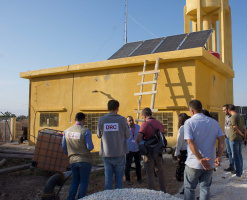
As global crises intensify, forced displacement is continuously rising. According to the Danish Refugee Council (DRC), an additional 6.7 million people could be displaced by the end of 2026 due to conflict, climate change, and socio-economic instability. In the latest edition of the VOICE Out Loud, DRC highlights how fragility and displacement are closely linked and why current EU approaches are falling short.
Drawing on its work in around 30 crisis-affected countries, DRC promotes a “triple nexus” approach that connects humanitarian action, development, and peacebuilding efforts. Rather than focusing on short-term fixes or migration control, this approach prioritises people’s needs from the outset, helping communities become more self-reliant and resilient over time. A key part of this is anticipatory action, which uses data and forecasts to act early, reducing risks and preventing crises from escalating into full-scale emergencies.
Through examples from Syria and Ukraine, DRC shows that community-based, integrated support can make a real difference. Based on this experience, DRC recommends European Union and its Member States to rethink their role in fragile contexts and focus on what works:
• Increase dedicated and flexible funding for fragile settings, bridging the gap between humanitarian action and long-term development support
• Prioritise a people-centred, human rights-based approach that strengthens resilience and supports community-level solutions
• Ensure migration funding addresses the needs and rights of displaced people, rather than focusing on migration control
• Recognise and support the vital role of civil society and local organisations working in fragile contexts
In conclusion, DRC’s experience demonstrates that the needs in fragile contexts are best addressed when communities are empowered to respond to become self-reliant, ending the cycle of aid-dependence and allowing them to access their full rights.
Read the VOICE Out Loud #40 here.
Please click here to read the full article and click here to read the full issue.